



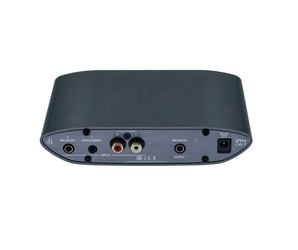
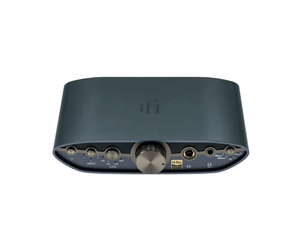
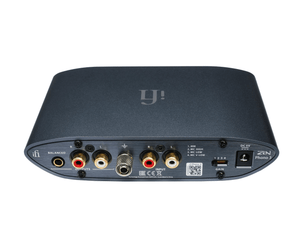
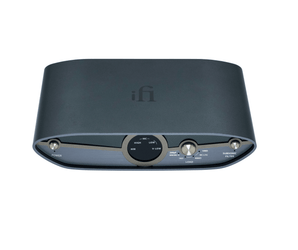





















An interview with Vincent Luk, co-founder of AMR and iFi audio

Q: What first made you notice that physical music was finding a new audience?
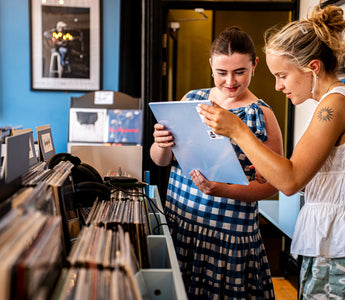
My nephew Jensen. He's 13, and he already has 16 LPs. Sixteen! What I love is the thrill he gets from visiting record shops, flicking through sleeves and discovering something unexpected.
He can listen to almost anything on his phone. But he'd rather go looking for a record. I can resonate with that feeling, and he discovered it without a lecture from me about the good old days!
Q: Is Jensen part of a wider comeback?
Very much so. People call it retro. I think it's more interesting. In 2025, global revenues from physical music grew by 8%, with vinyl up 13.7%, according to IFPI. CDs are attracting fresh interest too, and even cassettes have found a small but enthusiastic following.
We are a member of the Vinyl Alliance and their Gen Z Report tells a lovely story. Among the 18-to-24-year-old vinyl fans it surveyed, 84% buy records in physical shops. And 76% say they buy vinyl because they want a physical copy of the music.
Jensen is younger than those surveyed, but I recognise the same enthusiasm. It's about the experience around the music.
Q: Does it take you back to how you listened in the eighties?
Absolutely. In the 1980s, you made time for listening. I remember the pleasure of a Dual CS 505-3 turntable, Kenwood KX-3010 cassette deck and NAD 3020 amplifier and Mordaunt Short MS3.2 speakers. I collected records, tapes and CDs.
You turned a record over, rewound a tape or read the sleeve while an album played. It wasn't always convenient. But the music sure had your attention.
Q: Did that influence you when you co-founded Abbingdon Music Research?
It influenced everything. When we started AMR, we asked a rather awkward question: how do you measure good music against bad music?
You can measure noise, distortion and frequency response, and you absolutely should. But you can't put a neat number on the moment a song gives you goosebumps. The listener's brain is part of the story too. As this is at the end of the day, the ultimate listening machine that we all seek to please.
Our real test was whether the music felt alive. Did it draw you in? Did you want to hear the entire album?
We cared about human experience as much as specification sheets. That's where our love of an analogue-like presentation comes from: naturalness, texture and emotional connection.
Q: You've described that pleasure as a 'slow hit'. What do you mean?
Our phones offer another reels, another clip, another swipe. It catches your attention, then it's gone. This is all ‘fast Dopamine’ according to the famous psychologist TJ Power.
With an album, I take out the sleeve, lower the stylus and let the music unfold. The pleasure builds and stays with me. And this is ‘slow Dopamine’ which is healthier and more natural.
There is interesting science here. Research published in Nature Neuroscience found that deeply moving music can involve dopamine release both while we anticipate an emotional peak and when that peak arrives.
That doesn't prove vinyl causes a slower dopamine response than streaming. My 'slow hit' describes how listening feels, not a laboratory claim. Digital music can move you just as deeply; what matters is giving it the attention it deserves.
Q: And why is owning the music so important?
Because we like keepsakes. A favourite book, good wine, a fine cigar, a well-made audio product. They become part of your story.
There's a funny thing among LP collectors. We don't always ask each other, "How many records do you own?" Instead, we ask, "How many metres of LPs have you got?"
It's a way of measuring your collection by the shelf space it occupies, rather than counting every record. And in our case, we've got about six metres! So we are pretty avid record collectors.
It sounds a little ridiculous, doesn't it? But that's the beauty of collecting. Every sleeve has a story. You remember where you found it, who you were with and the first time you played it.
Streaming is wonderfully convenient, but there's something special about pointing to a record on your shelf and saying, "That one's mine and I bought it when I had a bad breakup (hope my wife isn’t reading this)."
Q: There's also a lot of work behind that little disc, isn't there?
Yes. Three stages take a mastered recording into the LP you hold.
First, the sound is cut as a groove into a lacquer disc. Second, that master is electroplated to create metal parts for the pressing machinery. Third, heated vinyl is pressed between stampers, then checked before it reaches a sleeve.
That doesn't make vinyl automatically better sounding than a fine digital recording. But the craft is visible, and people respond to that.
Q: You mentioned Journey's 'Don't Stop Believin'' when we spoke. Why that song?
I love the story behind it. Before Jonathan Cain joined Journey, he was struggling to make a living as a musician in Los Angeles. He asked his father if he should give up and go home. His father wrote him a short note and urged him, “Don’t stop believing.”
Jonathan wrote the words in a notebook. Years later, when Journey needed another song, he found them again. The rest is music history.
I've never stopped believing in the emotional pull of analogue sound, even as listening moved to digital.
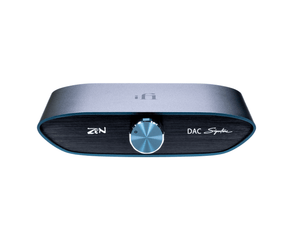
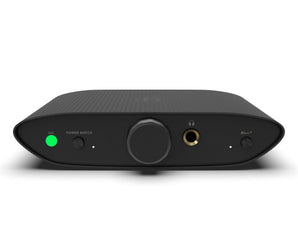
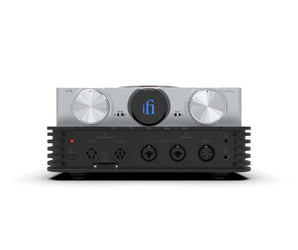
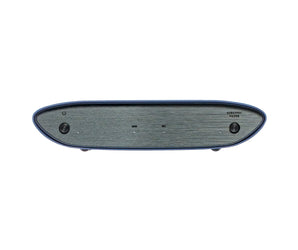
At iFi, we make digital products too, of course. But we still ask the same question we asked at AMR: does it make you want to keep listening?
When I see Jensen coming home happy with another record under his arm, I think the next generation is finding its own answer.